
What Does OSHA Require for Farm Sanitation?
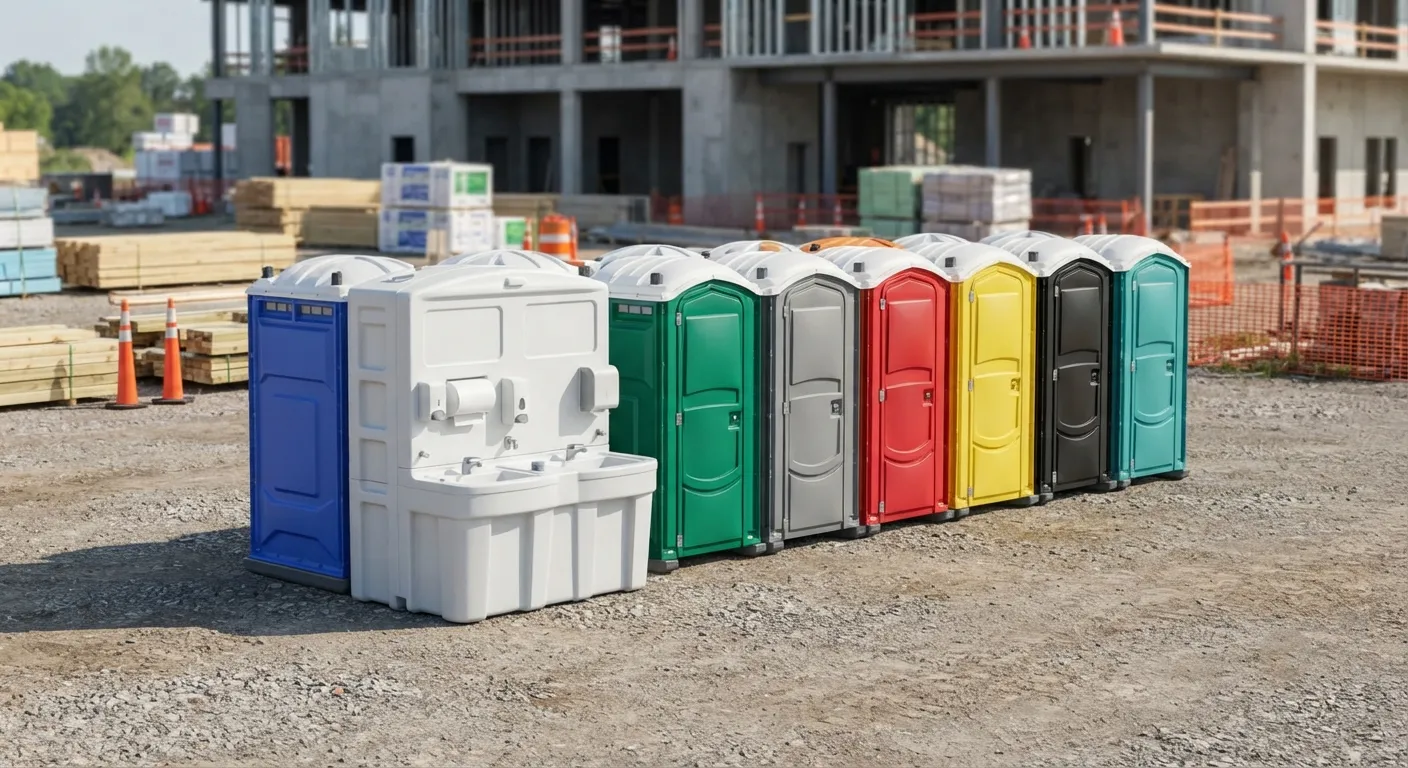
OSHA 1928.110 covers field sanitation for agriculture: potable water, toilets and handwashing for hand-labor employees, with one facility per 20 workers, and it has to sit within a quarter mile of where people are actually working the field. That is different from the general construction rule, 1926.51(c), which uses a headcount ratio without the walking-distance test. If your operation runs both a packing shed crew and a field crew, you may need both standards covered at once, and construction site services can get confusing fast when the crews overlap. Palmdale Porta Pros places units at row ends, along fence lines, or near equipment staging, wherever the walk stays under a quarter mile. A standard unit holds 60 to 70 gallons and stands about 92 inches tall, built to survive dust, wind and a flatbed dropping gear nearby. Water matters too: OSHA 1926.51(a)(1) requires an adequate supply of potable water at any place of employment, which on a farm usually means a water trailer or jugs staged next to the toilets. Ranches running livestock crews should ask about handwashing station rental or a portable sink rental sized for a crew that is washing hands between animal handling and lunch, not just at shift end.
How Many Units Does a Farm Need?
Start with the 1-per-20 ratio from 1928.110 and round up, not down. A 45-person picking crew needs three units minimum, plus a wash station, and if the crew splits across two fields more than a quarter mile apart, each cluster needs its own set. Palmdale operations spread across acreage west toward Leona Valley, 13.4 miles out, or east near Sun Village, 10.9 miles away, often run multiple standalone clusters rather than one bank of toilets at the entrance. That is the mistake we catch most: an owner puts six units by the gate because that is where the truck can reach, but half the crew never gets there within a quarter mile. Our guide on how many porta potties you need walks through the math, and OSHA portable toilet requirements breaks down the difference between the ag rule and the construction rule side by side. Pricing runs seasonal: a standard unit rents for $100 to $350 a day depending on service frequency, or $130 to $500 a week for a longer harvest push, and monthly agreements for standing ag operations land between $125 and $325. Check porta potty rental cost or monthly porta potty rental for the full breakdown before you commit to a season-long contract.
| duration | low | typical | high |
|---|---|---|---|
| day | $100 | $150 | $350 |
| week | $130 | $200 | $500 |
| month | $125 | $200 | $325 |
Where Should Units Go on a Working Farm?
Placement on ag land is different from a job site with a paved lot. You need firm, stable ground, since ADA Standards 302.1 calls for surfaces that are stable, firm and slip resistant, and that standard is worth following even where accessibility is not strictly required, because a unit sinking into irrigated soil is a service call waiting to happen. Keep units off the direct spray path if anyone's applying pesticides or fungicides nearby; OSHA 1926.51(f)(1) requires washing facilities where employees are applying paints, coatings, herbicides or insecticides, so a handwash station belongs right next to any mixing or loading area, not just at the main cluster. Our handwashing requirements page covers what that setup needs. For crews near the Acton area, 12 miles southwest of Palmdale, or out past Agua Dulce, 21.8 miles southwest, delivery access matters more than exact placement, since a truck needs real room to maneuver on unpaved rows. If your farm also runs a packing operation with a floor drain or grease-generating kitchen for crew meals, look at grease trap pumping separately, and if the property has its own septic system serving a farmhouse or bunkhouse, how often to pump a septic tank explains the 3 to 5 year interval most residential-scale tanks need. For remote acreage with no easy access, emergency porta potty rental and emergency septic service are both worth having on file before harvest starts.
How often do farm units get serviced during harvest?
ANSI/PSAI Z4.3 sets a baseline of one service visit per week for up to 10 users over a 40 hour week, but harvest crews running longer hours or bigger headcounts need more frequent pumping. Palmdale Porta Pros adjusts the schedule to crew size and season rather than sticking to a flat weekly visit.
Do we need a handwashing station separate from the toilets?
Yes, especially if anyone applies pesticides, herbicides or fungicides, since OSHA 1926.51(f)(1) requires washing facilities for that work specifically. Soap and towels are required too under 29 CFR 1910.141(d)(2); hand sanitizer alone does not satisfy it.
Can units be moved as the crew moves across fields?
Yes. Palmdale Porta Pros relocates units as picking shifts to new blocks, keeping every cluster within the quarter mile walk 1928.110 calls for. Plan the move a day ahead so service timing does not slip.
What if our farm is outside Palmdale proper?
We cover surrounding ag land, including sites near Quartz Hill, 9.7 miles northwest, and Desert View Highlands, 3.9 miles west. Check service areas for the full coverage list before booking.
Does a farmhouse or bunkhouse septic system need separate service?
Usually yes. A residential-scale septic tank typically needs pumping every 3 to 5 years depending on tank size and household count. See septic pumping service for scheduling on top of the field toilets.
Next step
Get a delivery date
Tell us the address, the dates and the headcount. We size the order and confirm the route.